
Written by Alexandre Bridi
26 October 2026 · 6 min read
Investors increasingly read through software that finds, reads and cites on their behalf. Publishers who sell to that new reader on their own terms will be paid for their work. The rest will be summarised for free.
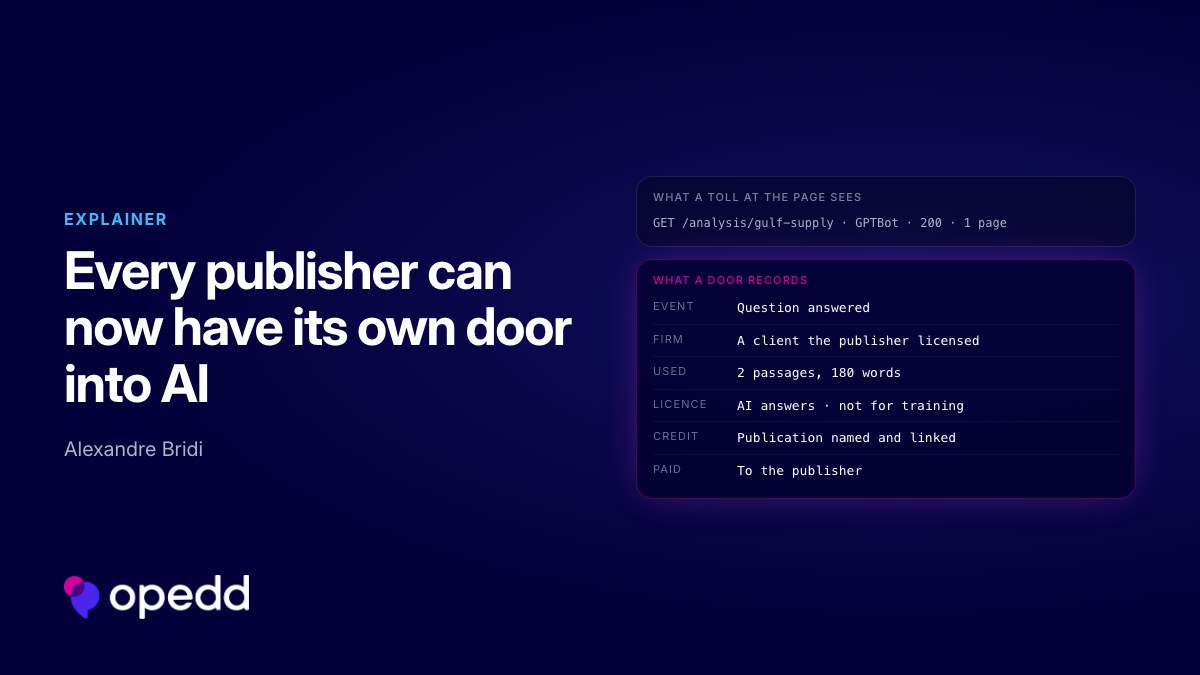
The most attentive reader of a good piece of investment research may soon be one that never opens it. An analyst at a hedge fund types a question into an AI research tool: what is really happening to oil supply in the Gulf, and should she trust the official figures? Within seconds the software has searched dozens of sources, read the passages that matter and written a few paragraphs, with citations. She has her answer. The firms whose work informed it may never know they were read.
This is not a forecast. Search already works this way. When Google put an AI summary at the top of its results, users clicked through to a website 8% of the time, against 15% when there was no summary, according to a study by the Pew Research Center of browsing data from March 2025. Only 1% clicked a link inside the summary itself. The question was answered; the source was not visited.
A reader with a budget
Publishers have spent two decades learning to sell to people: a homepage to draw them in, a paywall to stop them, a subscription to keep them. Software reads differently. It does not visit homepages, see advertisements or respond to a free trial. It arrives with a question, takes what it needs and leaves.
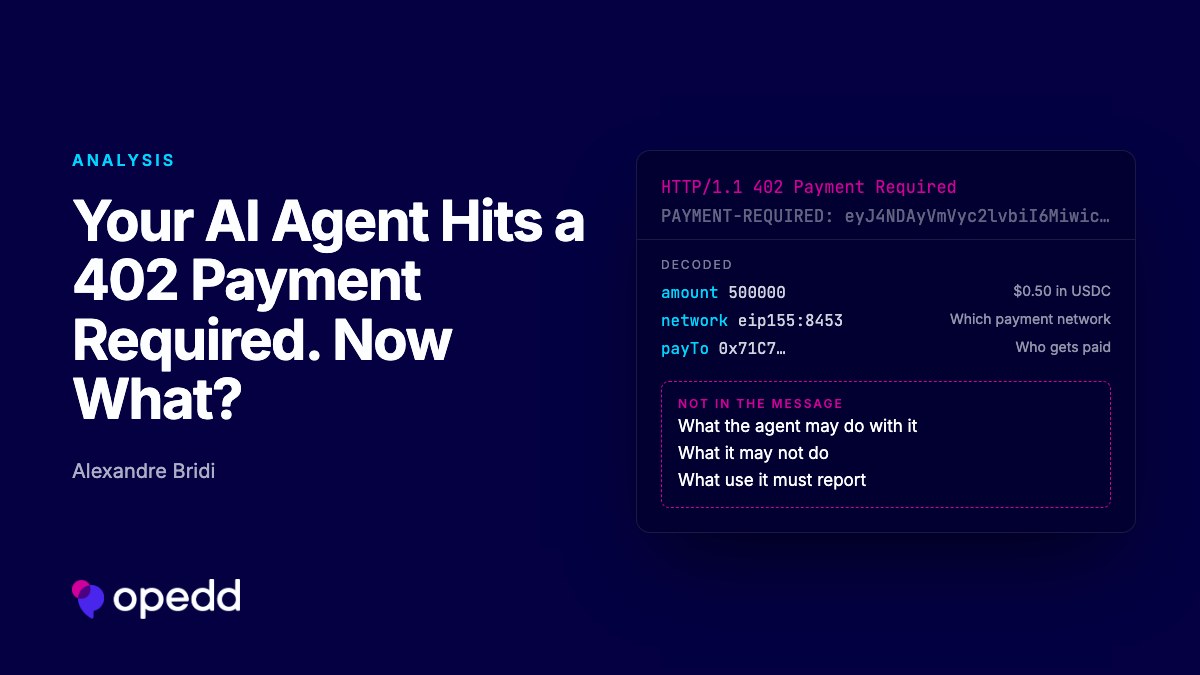
What is new is that it can increasingly pay. In September 2025 Google unveiled its Agent Payments Protocol, built with dozens of partners including Adyen, Mastercard, PayPal and Worldpay. Less than two weeks later Stripe and OpenAI released the Agentic Commerce Protocol, which lets ChatGPT complete a purchase on a user's behalf. Simpler schemes let software pay for a single request with no card form in sight; we looked at what happens when an agent runs into one of those paywalls in an earlier piece.
For anyone who sells information, this changes who the customer is. The buyer is still a person or a firm. But the thing doing the reading, the choosing and, more and more, the paying is software working on their behalf.
Five things that change
When the reader is software, almost every part of how a publication finds and keeps its customers looks different. Five matter most.
The big houses have moved
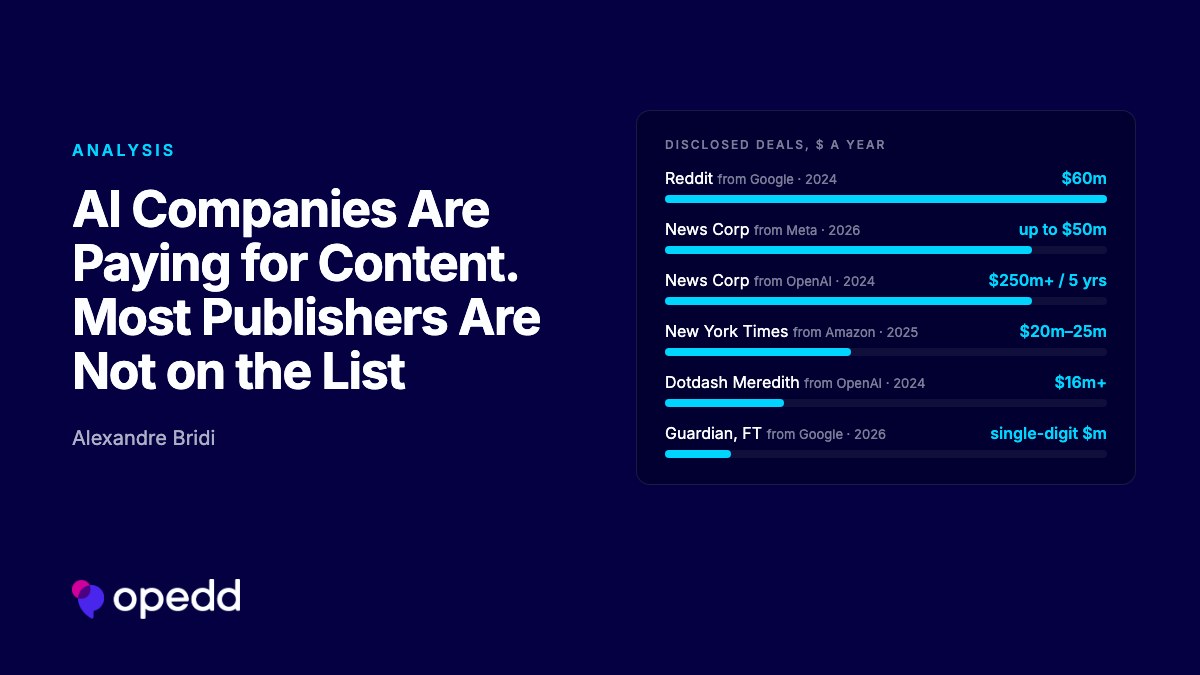
The largest research providers have not waited. Over the past year they have opened their libraries and databases to the AI tools their clients already use, and BCA Research now delivers its macro research through APIs and AI assistants. The AI platforms that investors use are opening their doors from the other side, letting clients plug in sources of their own. And the AI labs are buying too, not only to train models but to ground their answers in current reporting.
Each of these firms has engineers, lawyers and a sales team to manage such relationships. The thousands of independent research firms, analysts and specialist publications that funds actually read do not. For most of them the choice so far has been between blocking AI altogether and being read for nothing. Many research licences already forbid clients to put reports into AI tools, as the Copyright Clearance Center points out. That protects the publisher on paper and earns it nothing in practice.
What everyone else should do
The answer is not to block the new reader but to sell to it, on terms the publisher sets. That takes three decisions, none of them technical.
First, decide what you are selling. Letting an AI tool quote a few hundred words of your work in an answer is not the same as letting a firm keep a copy of your entire catalogue, and neither is the same as training a model on it. Each should be a separate licence, with its own price.
Second, put a price on each. Independent publications that already do so on Opedd set very different prices for each kind of use, and the range is wide. These are the publishers' own prices, not ours.
Third, insist on the record. Every use should carry the publication's name and a link back, and every licence should state who bought what, when and for which purpose. That record is what turns being read into being paid. It is also the first thing a buyer's lawyers will ask for.
None of this replaces the human reader. Subscribers still matter, and the best of them will keep reading the full piece. But the next reader a research firm gains is likely to be software working for a fund it has never met. Whether that reader pays is, for the first time, largely up to the publisher.
Opedd lets independent publishers make their work available to AI tools on their own terms: they choose what to license, set their own prices and are paid for every use. See what your publication could earn.